
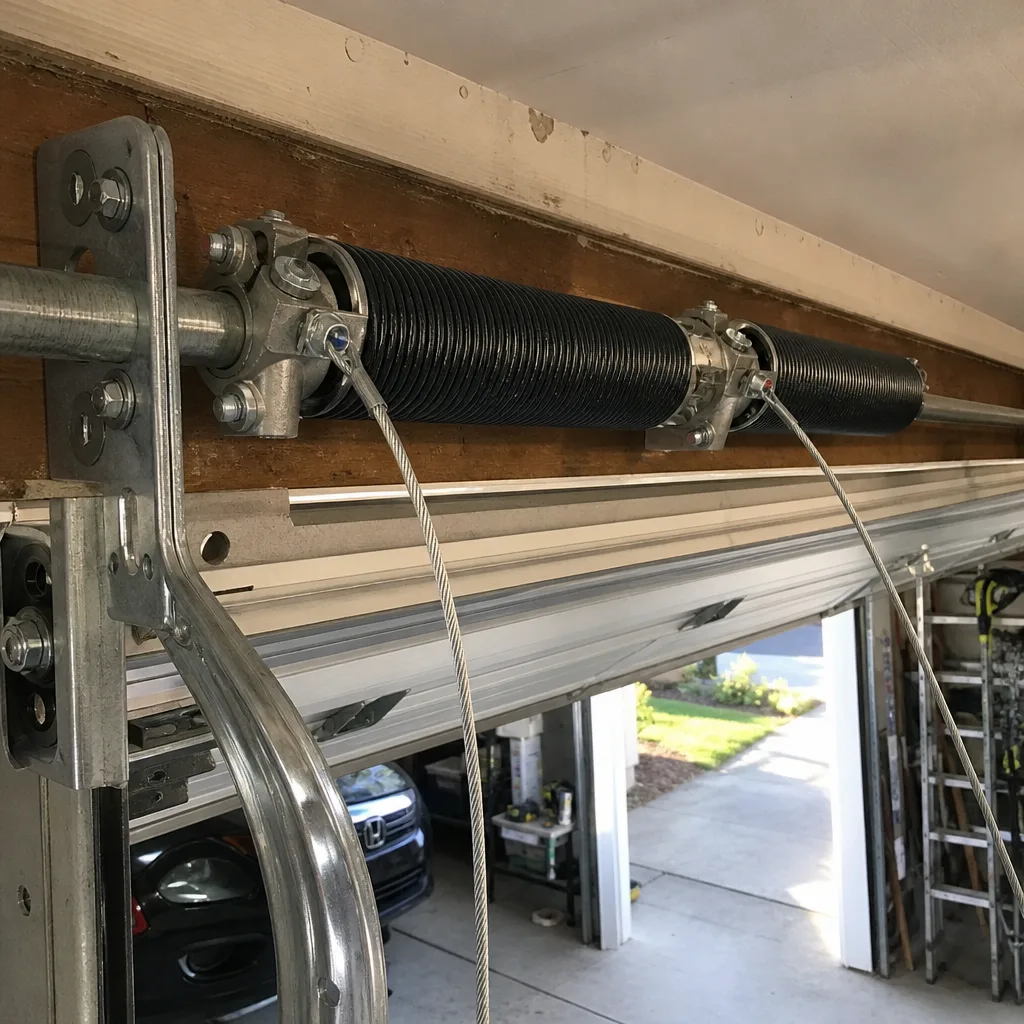
Last updated November 20, 2026
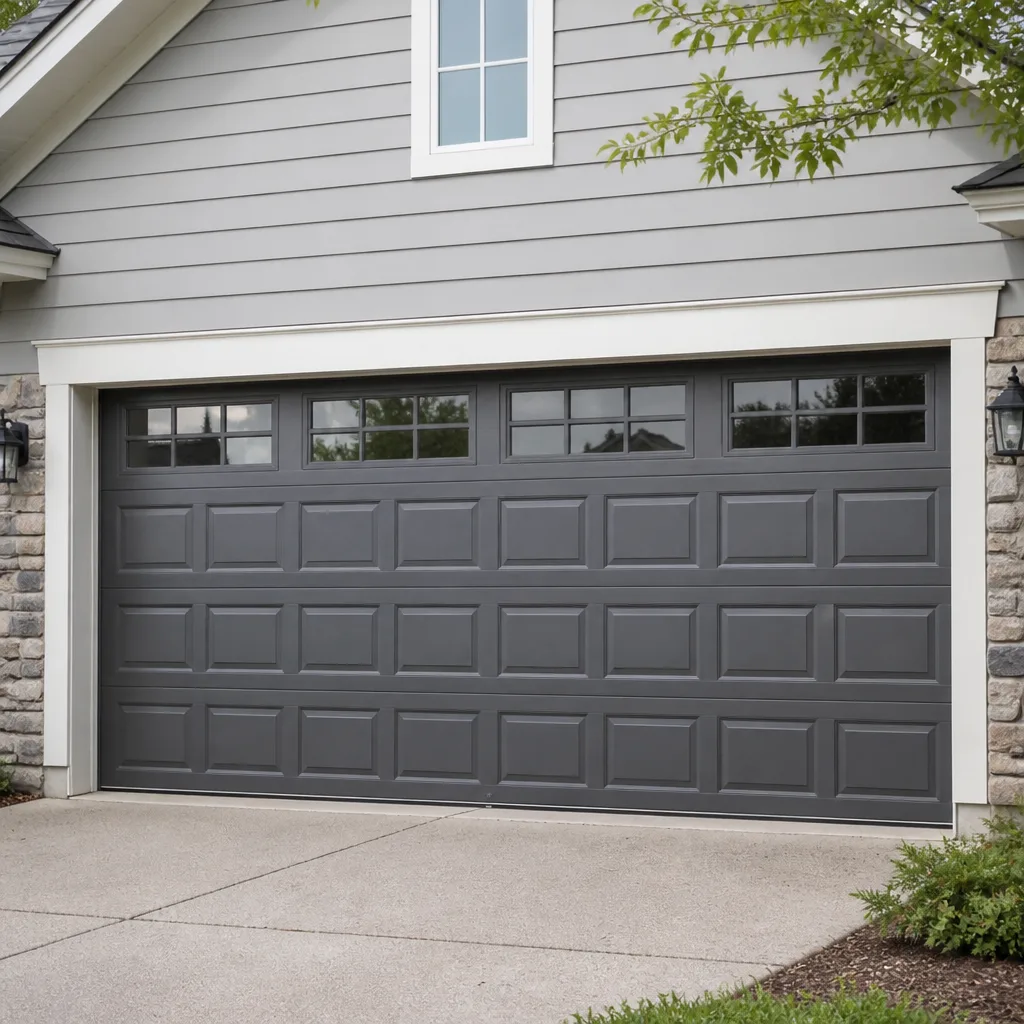 Raised-panel steel
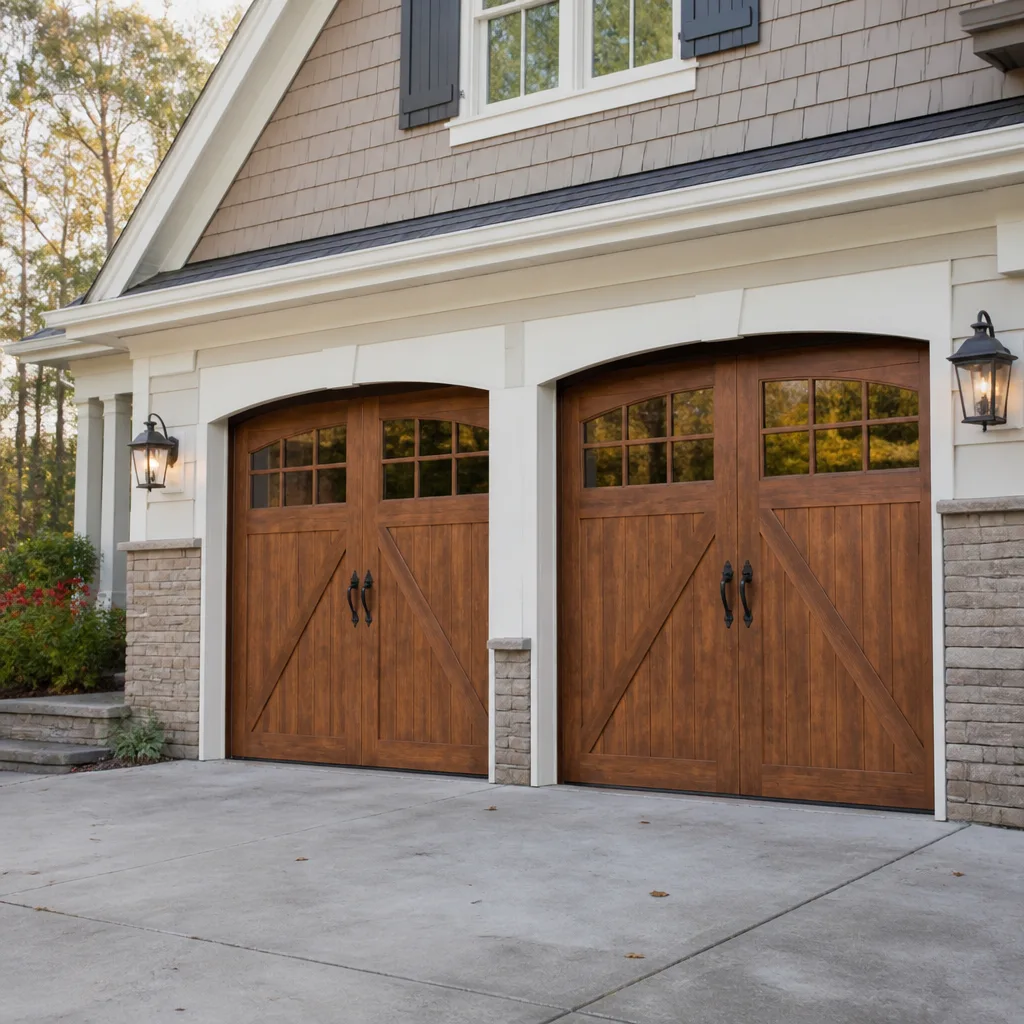 Carriage house
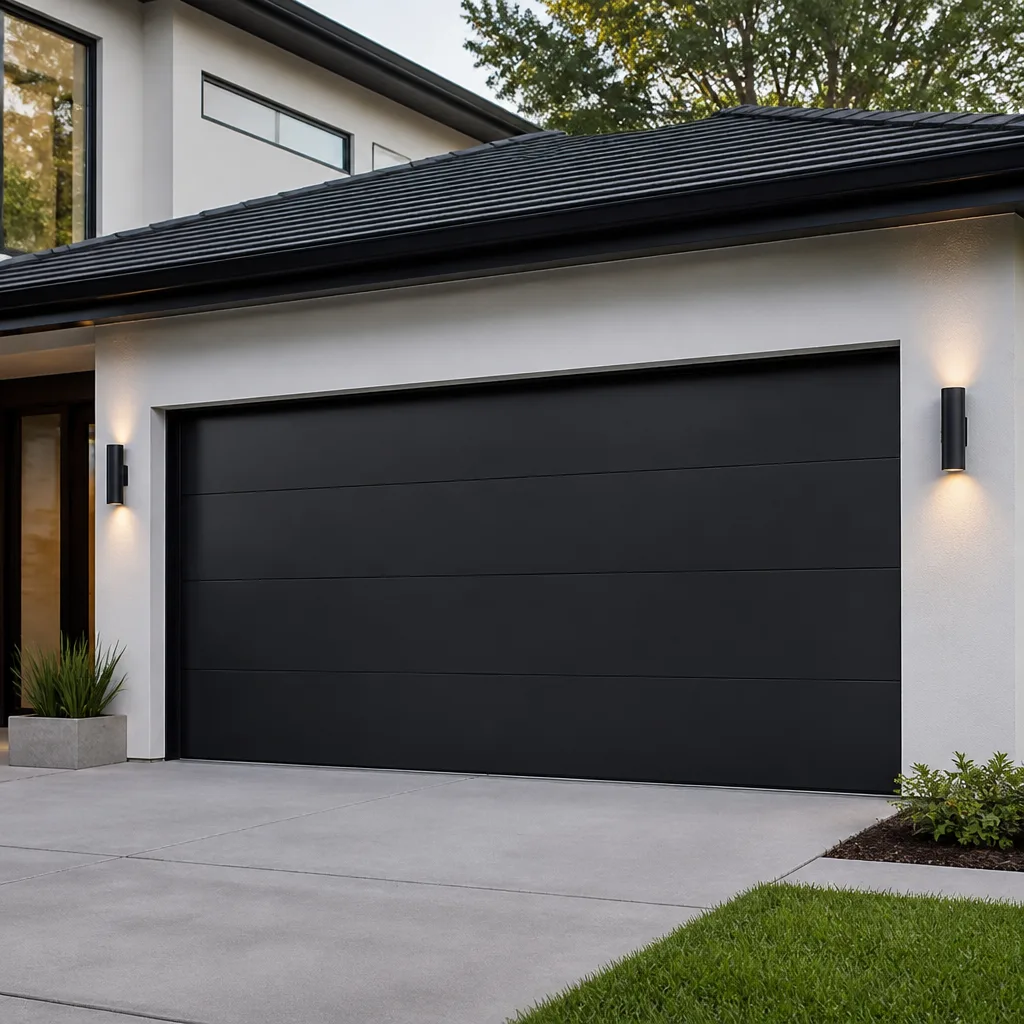 Modern flush
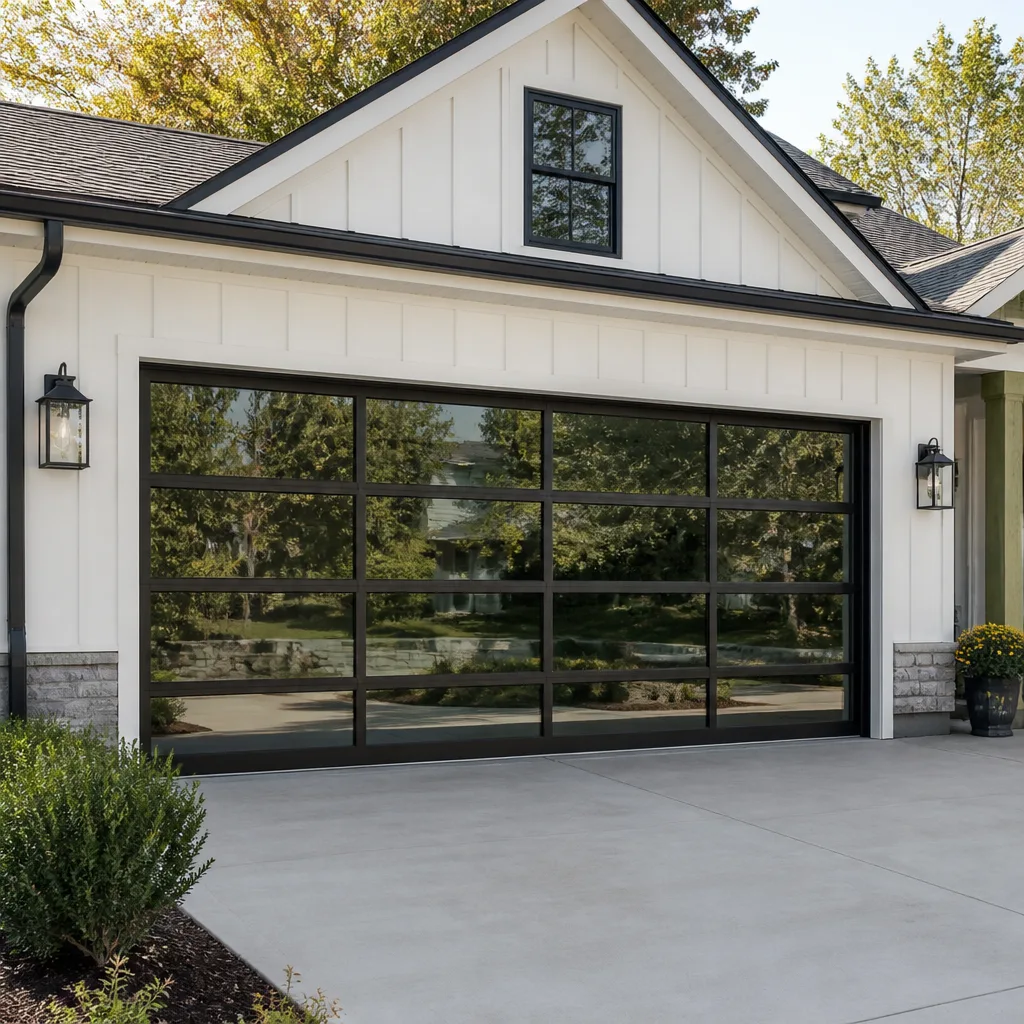 Full-view glass
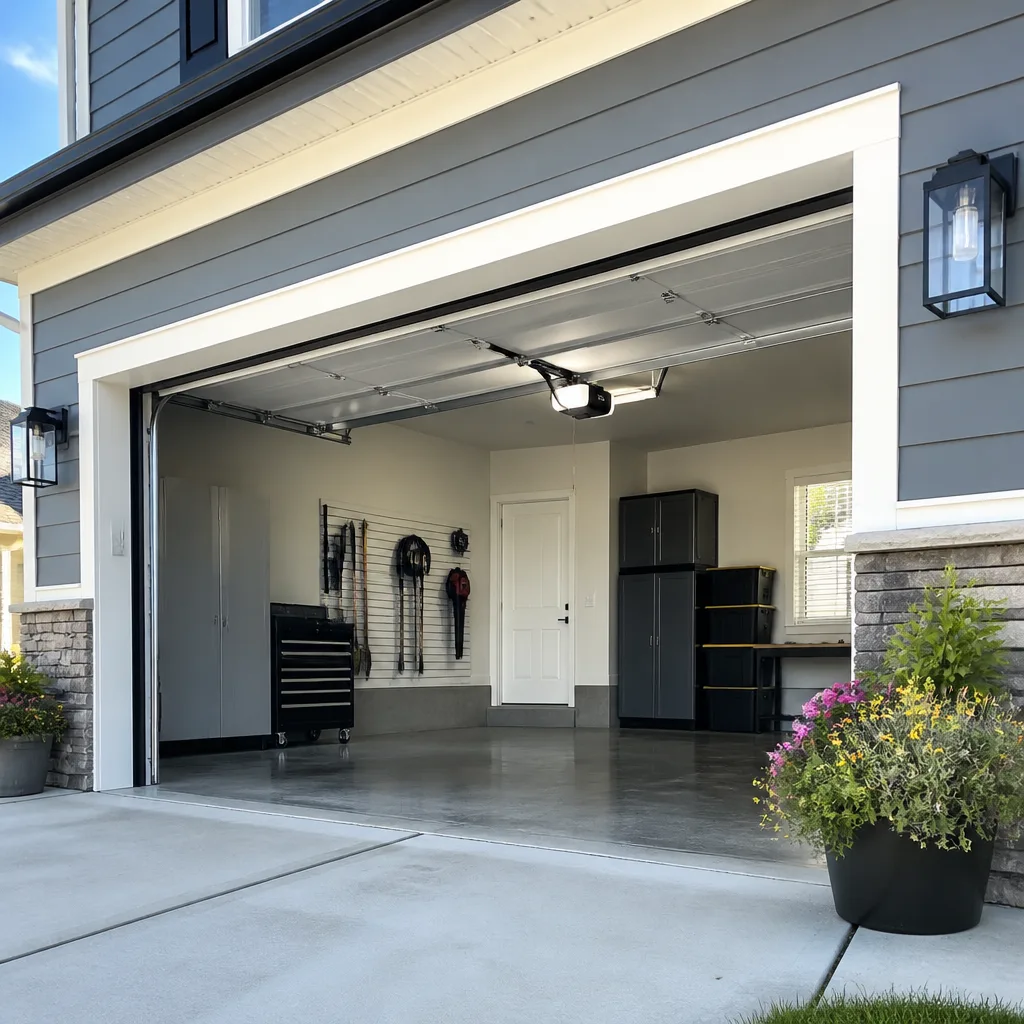 LiftMaster openers
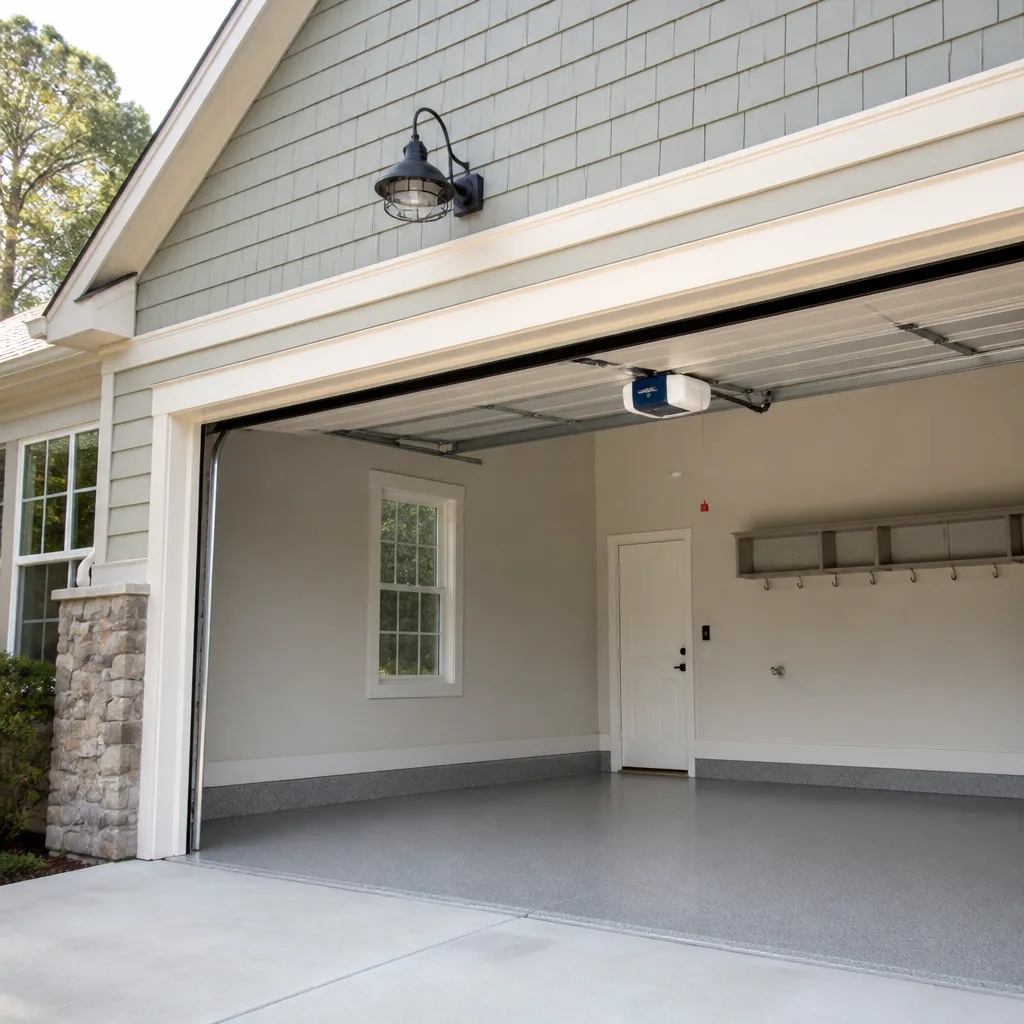 Chamberlain openers
Full 25-point door and opener safety check with every visit - springs, cables, rollers, tracks, and your LiftMaster or Chamberlain opener included
You get a price before we start. It does not change when the pro arrives.
Get your free estimateThe Complete Guide to Garage Doors in Akron
Most garage door advice you’ll find online is written for a house someone else lives in. It assumes a standard 16-foot opening, a builder-grade door from the last decade, and a climate that doesn’t swing from humid summer to hard freeze twice a year. Akron doesn’t cooperate with any of that. The city’s housing stock is old enough that garage openings were often framed by hand, door materials have to survive real freeze-thaw cycling, and the brand sitting in your garage might have been installed by a dealer who’s no longer around. This guide treats those conditions as the starting point. It covers how Akron’s housing stock shapes door and spring decisions, how materials hold up here, how to read cycle ratings, and when to repair versus replace.
Quick Answer
A garage door in Akron is best chosen and serviced around two realities: the opening was likely framed decades ago and may not be a standard size, and the door has to survive repeated freeze-thaw cycles rather than a mild year-round climate. In practice that means measuring the opening before buying anything, matching spring type to what’s already installed, and picking a material that tolerates moisture and temperature swings. Repair is usually the right call until the door’s panels, structure or cycle count say otherwise.
Styles & brands we work with
- Raised-panel steel
- Carriage house
- Modern flush
- Full-view glass
- LiftMaster openers
- Chamberlain openers
Table of Contents
- How Akron’s Housing Stock Shapes Garage Door Decisions
- Which Garage Door Materials Hold Up in Northeast Ohio?
- Torsion vs. Extension Springs: What Akron Homes Actually Have
- Brand Availability in the Akron Market
- How to Read a Cycle Rating and Match It to Your Usage
- Measuring for a New Door: What Homeowners Miss
- Repair or Replace? A Decision Framework
- Seasonal Maintenance for Akron Conditions
How Akron’s Housing Stock Shapes Garage Door Decisions
Garage doors are built to standard widths and heights because that’s what new construction uses. Akron’s older neighborhoods aren’t all new construction. A garage framed decades ago may have an opening that’s slightly wider, slightly shorter, or out of square compared to what a manufacturer’s catalog assumes. None of that is unusual, but it does mean the tape measure matters more here than in a subdivision built to one plan.
Two things follow from that. First, a door sized from the catalog without checking the actual opening is a door that may not fit, which turns a straightforward replacement into a custom order. Second, the framing above the opening, called the header, has to carry the door’s weight plus the spring system’s load. Older framing can be solid, but it has to be looked at, not assumed. The same goes for the vertical jambs and the distance from the opening to the ceiling, which determines whether a torsion system has room to sit.
Akron’s housing also spans a wide range of garage types. Attached garages on postwar homes and detached garages behind older properties both show up, and they behave differently. A detached garage is often unheated and exposed on all sides, which makes temperature swings more severe and pushes a door harder. An attached garage is buffered by the house but gets used far more often, which wears the springs and opener faster. Neither situation is a problem. It just changes what you should be looking for.
If you’re sorting out fit issues on an existing door, our garage door repair work starts with measuring the opening, checking the header, and confirming clearances before anything is ordered.
Which Garage Door Materials Hold Up in Northeast Ohio?
Material choice in this climate comes down to how well a door handles moisture and repeated temperature change. Akron sees humid summers and hard winter freezes, and a garage door expands, contracts, and takes on condensation through both. The material that looks best in a showroom isn’t always the one that holds up across a full year here.
Steel
Steel is the most common door material in Akron for good reason. It doesn’t absorb moisture, it doesn’t warp, and a properly finished steel door handles freeze-thaw cycles without structural problems. The weak point is the finish. Chips and scratches expose bare metal, and road salt tracked in on a car can accelerate corrosion along the bottom panel. A steel door with intact paint and a decent bottom seal is a reliable choice here.
Wood composite
Wood composite and composite-overlay doors look warmer than steel and hold paint well, but they need more attention. Composite resists rot far better than solid wood, though seams and end caps are where moisture gets in. In a heated attached garage a composite door does fine. In a detached, unheated garage that sees full humidity swings, it needs inspection each season.
Aluminum
Aluminum is light, won’t rust, and works well on oversized openings where a steel door would be too heavy for the hardware. It dents more easily than steel, though, and a dented aluminum panel on a door facing a driveway that gets bumped is a common sight. It’s a good fit for some applications and a poor one for others.
- Steel: best all-around for Akron; watch the paint and the bottom panel.
- Wood composite: good looks, needs seasonal inspection in unheated garages.
- Aluminum: light and rust-free, but dents easily.
- Insulation: matters most on attached garages where the door faces a living space.
Torsion vs. Extension Springs: What Akron Homes Actually Have
Most newer garage doors use torsion springs, a horizontal shaft-mounted system above the door. Many older Akron homes still have extension springs, which run along the horizontal tracks on either side. Which system you have changes the cost of a spring replacement and the number of parts involved, so it’s worth knowing before you call anyone.
A torsion system typically uses one or two springs on a shaft. A matched pair is normally replaced together, because springs of the same age fail at similar times, and a single replacement leaves you with mismatched tension. An extension system uses two springs, one per side, and often includes safety cables running through them. If those cables are missing on an older installation, that’s a safety concern worth addressing.
Spring work is the most dangerous repair in garage door service. The springs are under significant tension, and a spring that releases unexpectedly can cause serious injury. We don’t recommend homeowners attempt spring replacement, and we don’t walk anyone through it. What we do recommend is knowing which system you have so you can describe it accurately and get an accurate estimate.
- Look above the door for a horizontal shaft: torsion system.
- Look along the side tracks for springs running parallel to them: extension system.
- Check for safety cables through extension springs. If they’re absent, mention it when you call.
- Note whether the door has one spring or two, and whether the springs are the same size.
Repairing the door is the priority when a spring fails, and our Akron Garage Door Repair Co team handles spring replacement as a dedicated service rather than a side job.
Brand Availability in the Akron Market
Brand matters less than people expect for repair, and more than people expect for installation. For repair, what matters is whether the technician works on your brand at all and whether the right hardware is available. For a new door, what matters is dealer support and lead time. Some manufacturers have strong local distribution in the Akron area, and others mean parts or a door shipped in, which adds time.
On the door side, Clopay and Amarr both have good availability through local channels, which keeps lead times reasonable on standard sizes. Wayne Dalton is also common in this market and shows up on a lot of existing homes, so replacement panels and hardware are generally obtainable. On the opener side, LiftMaster, Chamberlain, Genie, Craftsman and Raynor are all brands we service regularly. That range matters because a garage door company that only works with one opener brand will often push a full replacement when a repair would do.
Here’s the practical version: if your existing door is a Clopay, Amarr or Wayne Dalton, matching or replacing it is usually straightforward. If it’s an off-brand door from a defunct dealer, a full replacement may be easier than chasing parts, and that’s a conversation worth having honestly rather than being steered into.
When an opener is the problem rather than the door, garage door opener repair covers the full range of these brands rather than defaulting to replacement. Our technicians have up to 8 years of experience working across them.
How to Read a Cycle Rating and Match It to Your Usage
Every garage door spring has a cycle rating: the number of open-and-close cycles it’s designed to complete before it’s expected to fail. A cycle is one full up-and-down. Standard springs are commonly rated around 10,000 cycles, and higher-cycle springs are available at a higher cost. The number matters because it tells you how long the spring should last given how often you actually use the door.
Here’s where Akron usage patterns come in. A door on an attached garage used by a household that comes and goes several times a day can easily run 1,500 to 2,000 cycles a year. At that rate a 10,000-cycle spring has a working life measured in years, not decades. A door on a detached garage that opens once a day runs far fewer cycles and can last much longer. Two identical doors on the same street can have very different spring lives because of how the household uses them.
- Attached garage, multiple daily trips: higher annual cycles; consider a higher-cycle spring when replacing.
- Attached garage, light use: standard springs are usually adequate.
- Detached garage, occasional use: lowest cycles; spring life is long, but inspect for corrosion and lubrication.
- Any door used by a household with several drivers: count the trips honestly, not optimistically.
When a spring is being replaced, asking for a higher cycle rating is one of the few upgrades that genuinely pays for itself. It doesn’t change how the door looks or works, it just lasts longer under the same use.
Measuring for a New Door: What Homeowners Miss
A new door is measured and ordered, not pulled off a rack, so getting the numbers right the first time saves weeks. The width and height of the opening are the starting point, but they’re not the whole picture. The space around the opening, the headroom above it, and the position of the tracks all affect what will fit.
- Measure the opening width at the top, middle and bottom. Older framing is sometimes inconsistent, and the widest point is what matters.
- Measure the opening height on both sides. Uneven floors are common in older garages.
- Measure headroom from the top of the opening to the ceiling. This decides whether a torsion system fits or a low-headroom setup is needed.
- Check side room from the opening edge to the nearest wall or obstruction, on both sides.
- Note the backroom from the opening to the back of the garage, which affects how far the door travels when open.
If any of these numbers come back irregular, the door becomes a custom order, and the lead time lengthens. That’s not a reason to panic. It’s a reason to measure before you commit to anything. For a new door, garage door installation always starts with a free measure and a written price, then a scheduled install once the door is in.
Repair or Replace? A Decision Framework
Most garage door problems are repair problems. A broken spring, a failed opener, a door off its tracks, a bent section, a frayed cable: each of those has a straightforward fix, and replacing the whole door to solve it is usually unnecessary. The cases where replacement actually makes sense are narrower than the sales pitch suggests.
- Repair when the door structure is sound and the failure is in a component: spring, opener, roller, hinge, cable, track alignment.
- Repair when the door is older but fits well and the panels aren’t rusted through or cracked.
- Replace when multiple panels are damaged beyond reasonable repair.
- Replace when the door has reached the end of its cycle life and the hardware is failing repeatedly.
- Replace when the door is the wrong size for the opening or has been modified poorly.
- Consider replacing when an attached garage door is uninsulated and the garage shares walls with living space.
Our position is repair first, replace only when necessary. A technician who diagnoses a bad opener and finds it’s a stripped gear should repair the gear, not sell a door. When a repair genuinely won’t hold, we say so directly and explain why.
Seasonal Maintenance for Akron Conditions
Freeze-thaw cycles are hard on garage doors in ways that don’t show up in milder climates. Metal expands and contracts, seals stiffen and crack, and lubricant thickens in cold. A short maintenance routine twice a year, before summer and before the first hard freeze, prevents most of the avoidable problems.
- Lubricate the moving parts: rollers, hinges, and the spring shaft on torsion systems. Use a garage door lubricant, not general-purpose oil.
- Inspect the bottom seal: a cracked or stiff seal lets moisture and cold air in, and it’s cheap to replace before winter.
- Check the weatherstripping around the door frame for gaps and hardening.
- Watch the balance: a door that doesn’t stay halfway up, or that slams down, has a spring or tension problem.
- Listen for new sounds: grinding, squealing or banging usually points to a specific worn part.
- Clear the tracks of debris and check for bends or misalignment.
- Test the opener’s safety reverse by placing an object in the door’s path and confirming it reverses.
None of that requires climbing on anything or touching the springs. Leave the spring work to a trained professional. The rest is simple inspection that a homeowner can do safely in an afternoon.
Common Mistakes to Avoid
- Buying a door before measuring the opening. Akron’s older garages often aren’t square, and a catalog size may not fit. Measure top, middle and bottom before ordering anything.
- Replacing one spring of a matched pair. Springs of the same age fail close together, and a single replacement leaves mismatched tension. Replace both when they’re a pair.
- Accepting a full replacement quote for a repair-level problem. A failed opener, a bent track or a worn roller doesn’t require a new door. Get a diagnosis before agreeing to replacement.
- Ignoring a missing safety cable on extension springs. Older installations sometimes lack them, and that’s a safety issue worth correcting regardless of whether the springs are near failure.
- Skipping lubrication through the freeze-thaw season. Parts wear faster and seals crack sooner if they’re dry going into winter.
- Choosing a door material for looks alone. A beautiful wood composite door in an unheated detached garage needs more upkeep than a steel door in the same spot.
- Assuming cycle ratings are all the same. A spring’s rated cycles against your household’s actual daily trips is the real measure of how long it will last.
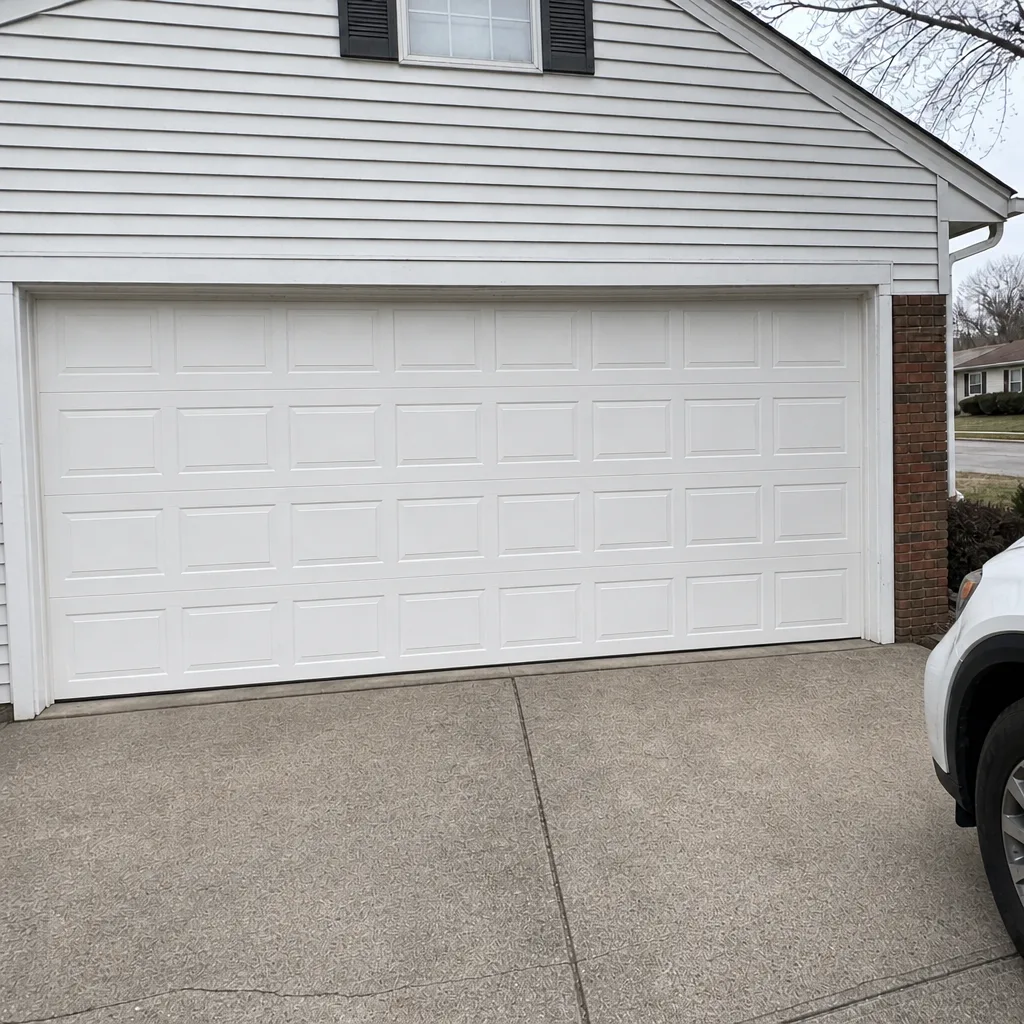
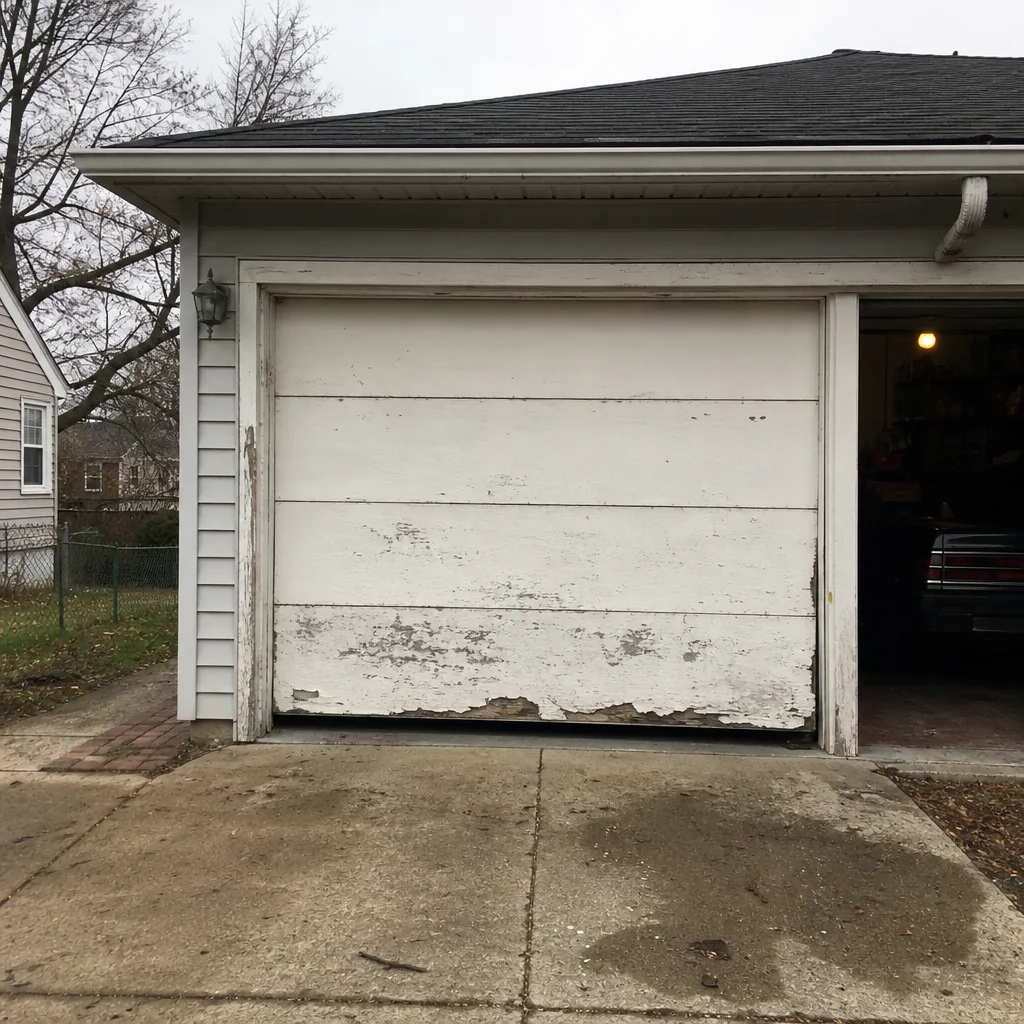
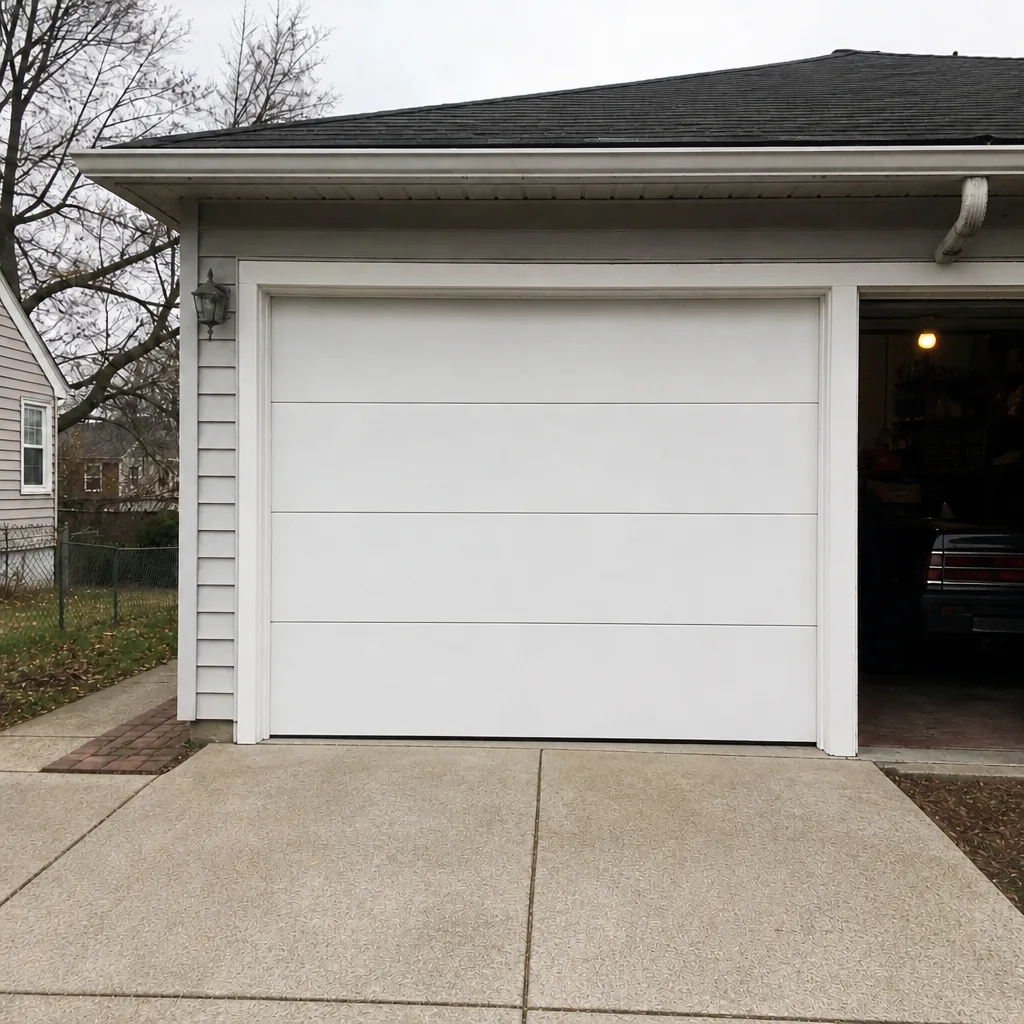
See the difference
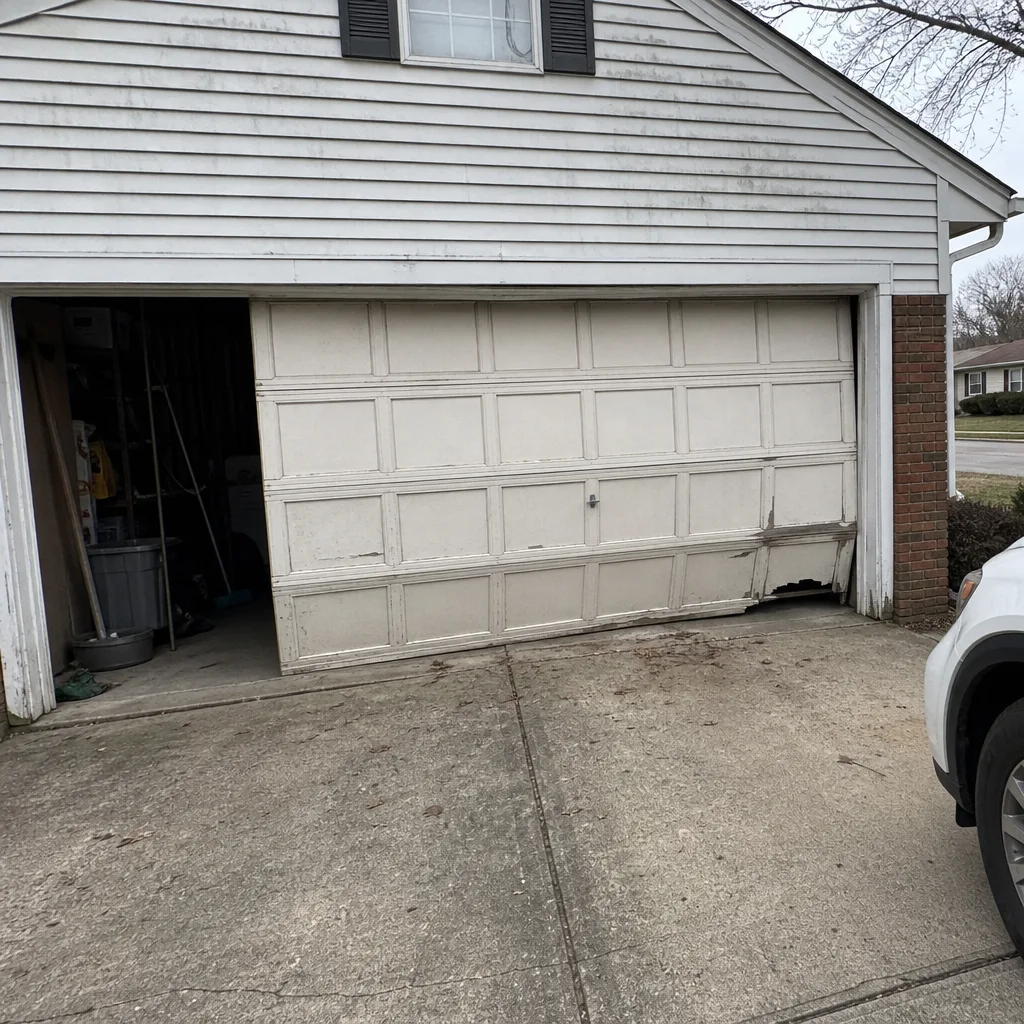 Before
 After
 Before
 After
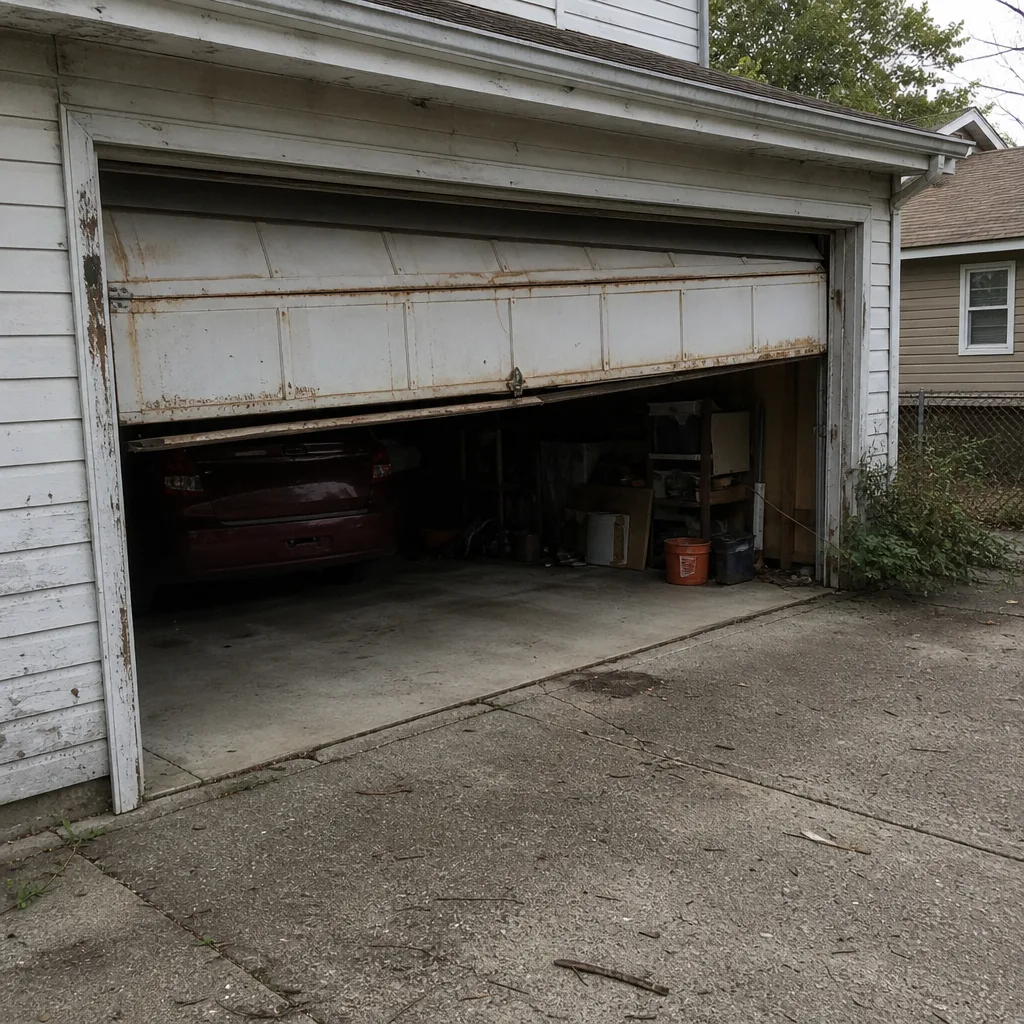 Before
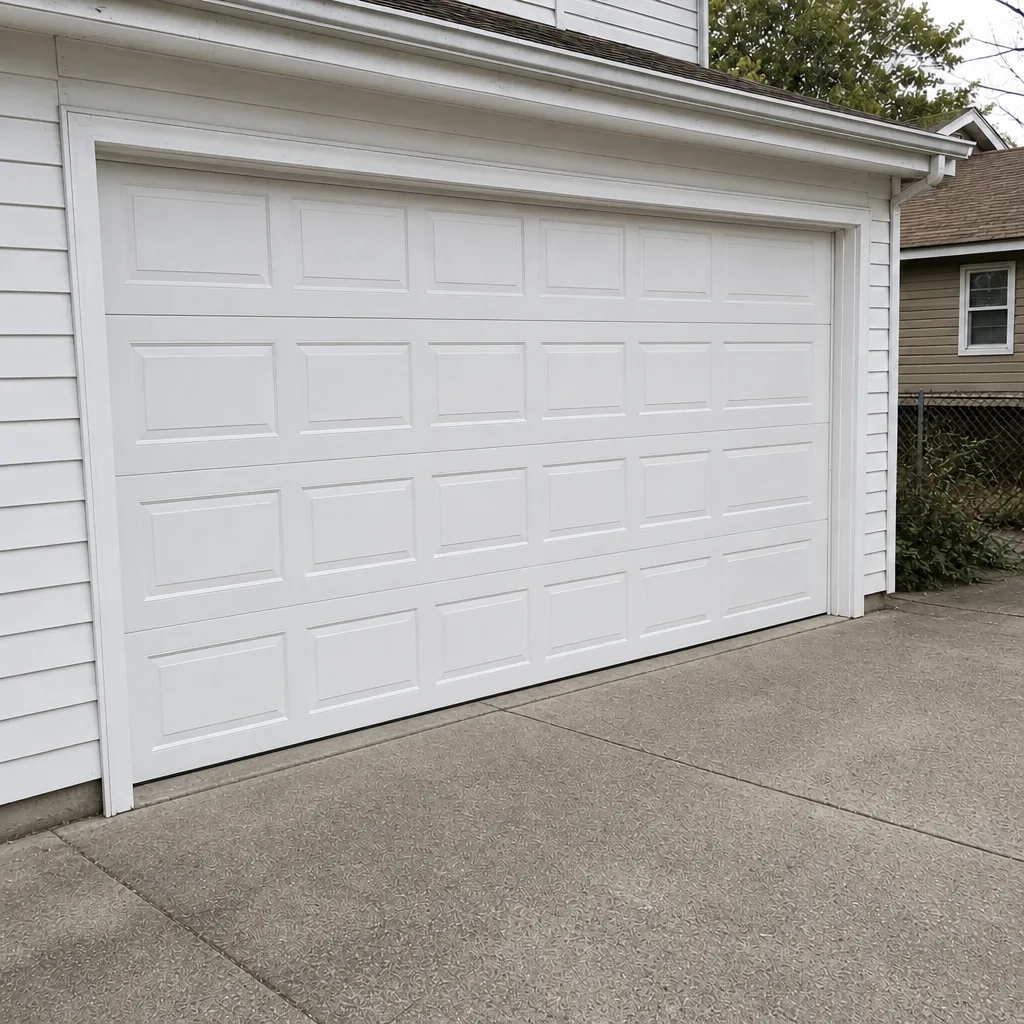 After
When to Call a Professional
Call a professional when a spring breaks, when the door comes off its tracks, when a cable frays, or when an opener stops responding and simple checks like the remote battery and the wall switch don’t fix it. Call when the door won’t stay up, when it slams down, or when it’s noticeably harder to lift than it used to be. Call when you hear a loud bang from the garage and the door won’t open. Those situations involve tensioned components or heavy door movement, and they’re not safe to work on without the right tools and training. Akron Garage Door Repair Co offers free estimates in Akron. Call (877) 792-5739. We answer 24/7. Fast dispatch from 7am to 7pm, Sunday through Friday.
Frequently Asked Questions
Spring repair in Akron typically runs from around $150 to $350 for a single spring, with a matched pair usually costing about twice that because both are replaced together. Torsion and extension systems price differently, and a higher-cycle spring costs more than a standard one. The written estimate sets the final price, and it’s agreed before any work starts. Call (877) 792-5739 for an exact quote. Estimates are free.
A spring lasts based on cycles, not calendar time, so it depends on how often your door runs. A standard spring commonly rated around 10,000 cycles on an attached garage used several times a day may last a number of years, while the same spring on an occasional-use detached garage lasts far longer. Akron’s freeze-thaw cycling adds wear, so lubrication through the seasons helps. Call (877) 792-5739 with your door’s usage pattern and we’ll give you a realistic estimate.
No. Springs are under significant tension, and releasing one unexpectedly can cause serious injury. We don’t provide step-by-step instructions for spring work, and we don’t recommend attempting it. A trained technician has the tools and the technique to do it safely. Call (877) 792-5739 for spring repair.
Sometimes. Many older Akron garages have openings that are slightly off standard, which means a catalog-size door won’t fit cleanly. The only way to know is to measure the opening at the top, middle and bottom, along with headroom and side room. A free measure tells you whether a standard size works or a custom order is needed. Call (877) 792-5739 to schedule one.
Clopay, Amarr and Wayne Dalton doors show up frequently in this market, and LiftMaster, Chamberlain, Genie, Craftsman and Raynor openers are all common. We service all of those brands, so the brand already in your garage isn’t a barrier to getting it repaired. Call (877) 792-5739 to confirm your specific model.
Yes, same-day service is available for repair work when you have a stuck or broken door. We answer 24/7, with fast dispatch from 7am to 7pm, Sunday through Friday. A call outside dispatch hours is booked into the next opening. Call (877) 792-5739 for same-day repair.
The Bottom Line
Akron’s garage doors live in a specific set of conditions: aging housing stock that may not match standard sizes, freeze-thaw cycles that stress materials and seals, and a brand landscape where some manufacturers have strong local support and others don’t. Getting the door right starts with measuring the opening, knowing whether you have a torsion or extension spring, and choosing a material for the conditions it will actually face. Repair is usually the right answer until the structure says otherwise. Our technicians have up to 8 years of experience across eight major brands, and we work on the door and opener you already have. Call (877) 792-5739 for a free estimate. We answer 24/7. Fast dispatch from 7am to 7pm, Sunday through Friday.
Written by the team at Akron Garage Door Repair Co.